

Modern recording software gives aspiring audio engineers access to tools that once required a professional studio. A laptop, an audio interface, a microphone, and a digital audio workstation can provide an excellent environment for experimenting with recording and mixing.
But knowing how to operate software is only one part of audio engineering.
Engineering also involves understanding what happens before a signal reaches the computer, recognizing problems quickly, making informed technical choices, communicating with performers, and keeping a recording session moving. Anyone evaluating audio-engineering education should therefore look beyond a list of software packages and consider how the training develops those broader abilities.
Build Fundamentals Before Relying on Tools
Software can make complicated processes appear deceptively simple. A preset can change an EQ curve, compress a vocal, or add an effect within seconds, but using those tools effectively requires understanding what they are actually doing.
Fundamental concepts such as signal flow, gain structure, microphone placement, routing, monitoring, and frequency balance help engineers make deliberate decisions rather than simply trying settings until something sounds acceptable.
Those fundamentals also make it easier to adapt. Studios differ, recording situations change, and engineers regularly encounter unfamiliar equipment. Someone who understands the principles behind the tools is usually better positioned to determine how a new setup works than someone who has memorized one specific workflow.
When evaluating training, look for a curriculum that connects technical explanations with opportunities to apply them. Learning why microphone position affects a recording, for example, becomes more meaningful when students can move the microphone, record another take, and compare the result.
Practice the Entire Recording Process
A recording session involves much more than pressing the record button.
Before tracking begins, equipment has to be selected and connected, inputs must be routed correctly, levels need to be established, and the session itself should be organized. During recording, engineers monitor both technical quality and the needs of the performers. Afterward, the work moves toward editing, mixing, and eventually preparing the finished audio.
Experiencing those stages as a connected process helps explain why practical training deserves attention when comparing educational options.
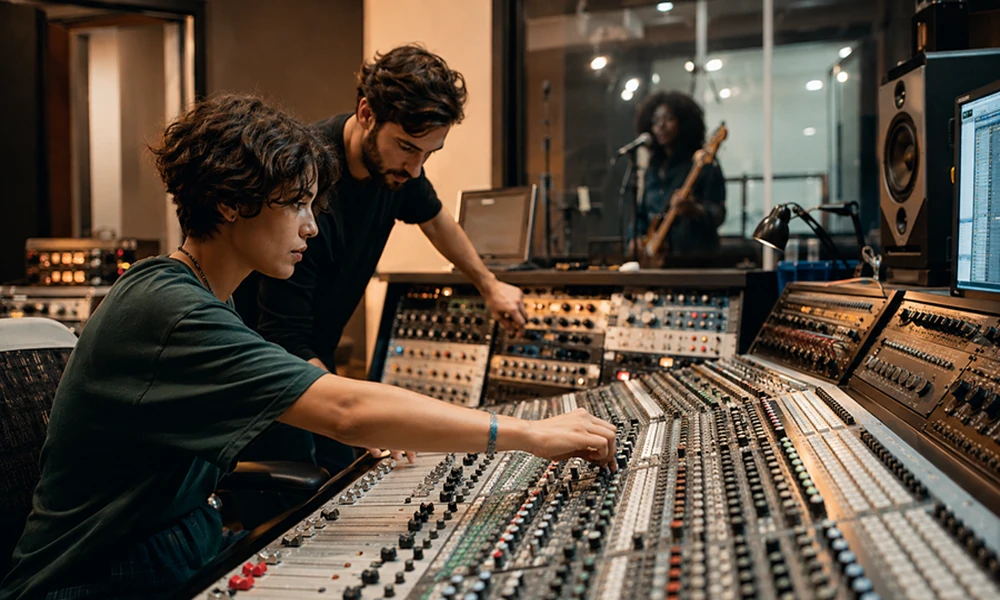
For students who want structured opportunities to move beyond theory, a hands-on audio engineering program can provide a useful learning environment when it combines technical instruction with repeated recording, mixing, studio-workflow, and equipment experience.
The important consideration is not simply whether a school has an impressive studio. Ask how students actually use the facilities. Do they configure sessions themselves? Do they record musicians? Can they practice routing and microphone choices? Are they expected to solve problems rather than merely observe an instructor?
Repeated responsibility is what turns technical concepts into working habits.
Learn to Troubleshoot Instead of Memorizing Presets
Recording rarely goes exactly as planned.
A signal may suddenly disappear. A microphone can introduce unwanted noise. A performer may need a different headphone mix. A session might contain incorrect routing. Two microphones may interact in an undesirable way. Software settings can also create problems that are not immediately obvious.
Troubleshooting requires engineers to work methodically.
Instead of randomly changing settings, they need to trace the signal path and identify where the problem begins. That might mean checking the source, cable, microphone, preamp, interface, routing, software input, monitoring chain, or another point in the system.
This type of reasoning becomes easier with practice because students begin recognizing patterns. They learn what normal behavior looks and sounds like, which makes abnormal behavior easier to identify.
A useful training environment should therefore allow mistakes to happen. Perfectly controlled demonstrations can teach concepts, but students also need opportunities to diagnose imperfect sessions, correct their own setup errors, and understand why something failed.
Develop Listening and Communication Skills
Technical ability matters, but recording is also collaborative work.
An engineer may work with artists, producers, musicians, assistants, venue staff, or other engineers. Each person approaches a project with different priorities, and the engineer often sits between the creative goal and the technical process required to achieve it.
That makes communication an important skill.
Engineers need to explain problems without interrupting the creative atmosphere unnecessarily. They should be able to ask useful questions, understand what an artist means when describing a sound, and translate subjective ideas into technical decisions.
Listening is equally important. Engineers have to recognize differences in tone, dynamics, balance, noise, space, and performance. Those judgments become more useful when they are connected to actions: repositioning a microphone, changing gain, adjusting an arrangement, modifying processing, or deciding that the existing sound already serves the music.
Working with different performers and recording situations can expose students to decisions that are difficult to reproduce through isolated exercises.
Evaluate the Learning Environment, Not Just the Equipment List
Professional equipment can be valuable, but equipment alone does not create an effective education.
When comparing audio-engineering training, consider how often students work practically, what responsibilities they have during sessions, whether instructors provide useful feedback, and whether the curriculum connects recording fundamentals with complete production workflows.
It is also worth asking whether students experience more than one type of audio environment. Studio recording is important, but exposure to areas such as live sound or post-production can broaden a student’s understanding of how audio principles apply in different contexts.
The goal should be adaptable skills rather than dependence on a particular console, plug-in, or DAW.
Conclusion
Learning recording software is a useful starting point for an aspiring audio engineer, but professional development requires a wider range of skills.
Understanding signal flow, operating recording equipment, troubleshooting problems, listening critically, communicating with performers, and completing sessions from setup through mixing all contribute to practical competence.
When evaluating audio-engineering education, look beyond the software logos and equipment photographs. Pay attention to what students are actually expected to do. The strongest learning environment is one that gives technical knowledge a practical purpose and provides enough repetition for that knowledge to become a reliable skill.
